


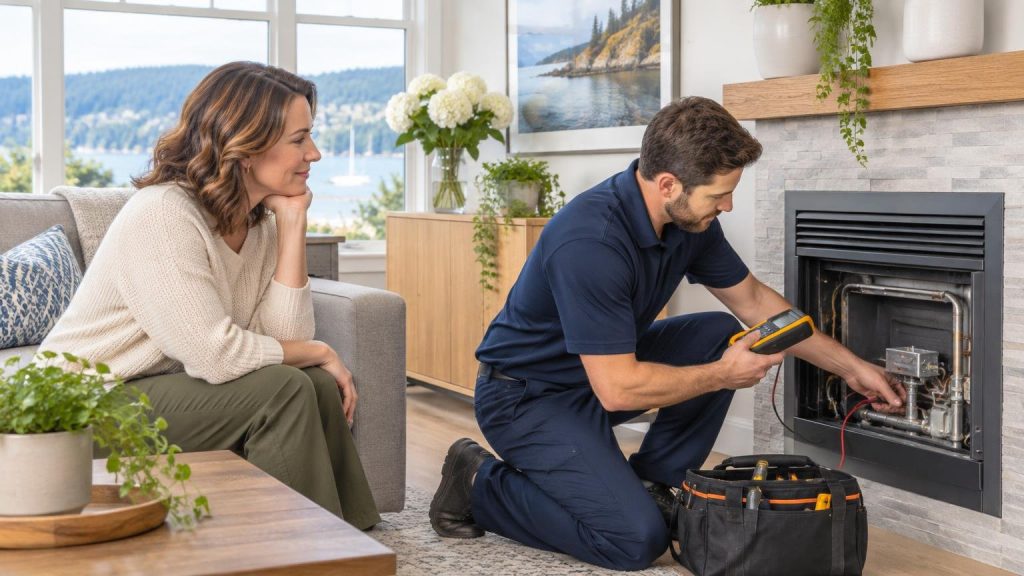
Gas heaters can make mild operating sounds, but sudden, loud, repeated, or unusual noises can point to a mechanical, airflow, ignition, or fuel-related concern. We recommend taking new noises seriously, especially during Nanaimo’s colder November weather, when your heating system may be running more often.
- Banging or booming may point to delayed ignition or expanding ductwork. Have it professionally assessed, especially if the sound is new or loud.
- Whistling or squealing may point to an airflow restriction or a worn moving part. Check that vents are open and have the system checked if the noise continues.
- Rattling or vibrating may point to loose panels, ductwork, or internal components. Avoid removing panels and have the unit inspected.
- Clicking that continues may point to an ignition or control issue. Turn the system off if it does not start normally and seek qualified help.
Know When a Gas Heater Noise Needs Attention
Heaters that start with a soft click or give the ductwork a small pop are not always a reason to worry. The sound matters most when it is new, louder than usual, repeated through the cycle, or paired with weak heat, uneven rooms, or frequent cycling.
When providing gas heater repair in Nanaimo, we often find that the sooner a sound is assessed, the easier it is to identify its source. A noise may come from the heater, the duct system, a moving part, or a control component. Guessing is rarely helpful, especially when gas equipment is involved.
Timing can offer useful clues. Sounds that happen only when the heater starts may have a different cause than sounds that continue while warm air is moving through the home. A noise at shutdown can also be related to cooling metal, airflow changes, or a component that is no longer operating as it should.
Changes to the sound are worth noting as well. A quiet rattle that becomes louder, a whistle that appears only in certain rooms, or a click that repeats without heat are all details that can help narrow down the concern. You do not need to diagnose the issue yourself, but clear observations can make a professional assessment more efficient.
Understand Banging, Booming, and Popping Sounds
Light popping can happen when metal ductwork warms up and cools down. As the material expands or contracts, it may make a brief tick or pop. That is different from a sharp bang or boom coming from the heater itself.
Booming can happen when gas does not ignite as smoothly as it should. This is sometimes called delayed ignition. Rather than lighting right away, gas may build up briefly before it ignites, creating a louder sound. This is not something to test by restarting the heater again and again.
Sounds that come from a vent or duct may seem alarming even when the heater itself is not the source. Ducts can carry noise from one area of the home to another, particularly when the system first begins moving warm air. Still, a sudden bang, repeated boom, or sound that is stronger than usual should not be dismissed as ordinary duct movement.
Loose duct sections, access panels, or nearby components can also make banging sounds as air begins moving through the system. Pinpointing the source can be tricky because the noise can travel through ducts, making it hard to tell where it began. A qualified heating professional can inspect the equipment and ductwork without you needing to open the cabinet.
Cooler weather in Nanaimo often makes these sounds more noticeable because heaters run longer and more often. If a bang is new, loud, or connected with unreliable heating, it deserves prompt attention.
- Note when the sound happens, such as at startup, during operation, or at shutdown.
- Turn the heater off if the bang is loud, new, or paired with poor heating performance.
- Keep the area around the heater clear of stored items.
- Have a qualified heating professional assess the system.
Recognize Whistling, Squealing, and Scraping Early
Whistling often points to an airflow concern. Air may be trying to move through a restricted path, which can create a high-pitched sound at a vent, return grille, filter area, or duct connection. You can safely check whether furniture, rugs, or other items are blocking supply vents.
Filters also matter. If your heater uses a replaceable filter, follow the manufacturer’s guidance for checking or changing it. A filter that needs attention can affect airflow, but it is still wise to have ongoing whistling assessed rather than assuming the filter is the only cause.
Return grilles need clear space too. These grilles draw air back to the heater, so blocking them can affect the system’s airflow and may contribute to unusual sounds. Keeping both supply vents and return grilles open helps the heater distribute warmth more evenly through the home.
Squealing is often linked to a moving component. It may begin as a faint sound and slowly become more noticeable over time. Since the heater may be needed daily during colder weather, it makes sense to address a squeal before it becomes a constant part of your morning routine.
Scraping or metal-on-metal sounds should not be ignored. Those noises can suggest that a component is not moving smoothly or may be out of position. Avoid forcing access panels open or attempting internal adjustments.
Airflow affects how your heater distributes warmth through your home. When air cannot move as intended, the system may work harder, heat rooms unevenly, or cycle differently than expected. An in-person assessment can help determine whether the noise relates to airflow, internal parts, or the duct system.
Take Clicking, Humming, and Rattling Seriously
One or two clicks during a normal heating cycle can be ordinary. Your heater uses controls that signal the system to start, ignite, and run. Repeated clicking without a normal start, however, may mean the ignition sequence is not completing as expected.
Humming can be a little more difficult to judge. A low, steady hum may simply be part of normal operation. A louder hum, a hum that changes in pitch, or one that begins suddenly can point to vibration, strain, or an electrical component concern.
Rattling may come from loose panels, nearby ductwork, or internal parts. Even if the sound seems minor, resist the urge to remove the heater cabinet and investigate. Gas heating equipment includes components that should be inspected by trained professionals.
Before an appointment, it helps to write down a few details:
- The type of noise and how long it has been happening.
- Whether the heater starts and heats your home normally.
- Whether the sound happens at startup, while running, or during shutdown.
- Any changes in airflow, room comfort, or cycling.
- The heater’s make and model, if available.
If you notice a gas odour, feel unwell, hear a severe boom, or suspect a serious problem, leave the area right away. Avoid switches, flames, and anything that could create a spark. From a safe location, contact the appropriate gas utility or emergency authority. This is separate from routine repair concerns and should be treated calmly and seriously.
Avoid Guesswork with Timely Heater Service
Unusual heater sounds are best assessed by qualified professionals because several issues can create similar noises. For example, a rattle may be a loose panel, while a similar sound could come from a duct connection or an internal component. A proper visit helps identify the source and determine whether a repair, adjustment, or another solution is appropriate.
ServiceXCEL Heating, Cooling & Plumbing handles gas furnace repair, maintenance, tune-ups, and installation services. When we assess a noisy heater, the sound pattern and heating performance give us useful clues before we begin examining the equipment.
Professional assessment can also help separate normal operating sounds from noises that need attention. This may include checking how the system starts, how air moves through the ducts, and whether accessible components appear secure. Gas equipment should always be handled with care, which is why internal inspections and adjustments are best left to trained professionals.
Some preparation can make the visit more productive. Note when the sound began, what it sounds like, whether it happens every cycle, and whether your home still feels evenly heated. These details can help us narrow down what may be happening.
November is a practical time to pay attention to heater behaviour. In Nanaimo and nearby communities such as Ladysmith, Cedar, Parksville, and Duncan, colder weather can bring previously quiet issues to the surface. Addressing a strange sound early may help you avoid relying on a noisy heater through the heart of the heating season.
Persistent noises, unusual sounds, and poor heating performance are all good reasons to have the system professionally checked. Your heater should not need to shout to get your attention.
Common Questions About Noisy Gas Heaters
Is A Small Popping Sound From My Gas Heater Normal?
Mild popping can come from metal ductwork expanding and contracting, especially at the beginning or end of a heating cycle. A loud, sudden, repeated, or new popping sound should be assessed to rule out a heater or ductwork concern.
Why Does My Heater Whistle When It Turns On?
Whistling can be related to restricted airflow, blocked vents, filters, or ductwork. Check that vents are not blocked by furniture or rugs. If the sound continues, a professional inspection can help locate the source.
Should I Keep Using A Gas Heater That Makes A Booming Noise?
Booming can be a warning sign, particularly if it happens at startup. Turn the system off and have it inspected rather than repeatedly restarting it to see if the sound disappears.
Can Rattling Come From Ductwork Instead Of The Heater?
Yes. Rattling may come from loose ductwork, panels, or components near the heater. Because sound can travel through ducts, a technician can help locate the true source and recommend the right repair.
What Information Should I Share When Booking Gas Heater Repair In Nanaimo?
Share the type of noise, when it occurs, when it started, whether the heater still provides heat, and any changes in airflow or comfort. Those details help create a clearer picture of what your system is doing.
Restore Quiet, Reliable Heat in Nanaimo
If a heater noise is disrupting your comfort, ServiceXCEL Heating, Cooling & Plumbing can help identify the cause and recommend the right next step. Book gas heater repair in Nanaimo with our team for a careful assessment of your system. To arrange an appointment, contact us today.