Is an Electric Furnace Right for Your Nanaimo Basement
Stay Cozy Below Grade: What Makes Nanaimo Basements Unique
Basements around Nanaimo and central Vancouver Island often feel a lot cooler and damper than the rest of the home. Our coastal climate brings mild winters, but it also brings consistent moisture, cool ocean air, and long stretches of grey, wet weather that can make below-grade spaces feel clammy. Concrete walls, limited natural light and less insulation all add to that chilly basement feeling.
Because of this, many homeowners think about finishing or upgrading their basements, then hit a wall when it comes to heating. Electric furnace installation is one of several options that can make a basement more comfortable and usable, whether you have a rental suite, family rec room or home office. In this article, we will walk through how electric furnaces work in a basement setting, where they shine, where they may fall short and how they compare to other common heating choices in Nanaimo homes.
Our goal is to help you decide if an electric furnace is the right fit for your specific basement, so you can invest in a solution that feels good, fits your budget and makes sense for your property on central Vancouver Island.
How Electric Furnaces Work in a Basement Setting
An electric furnace uses resistance heating elements, similar to oversized versions of what you find in an electric baseboard or space heater. When the thermostat calls for heat, electricity flows through these elements, they heat up and a blower fan pushes air over them and into your ductwork. The warmed air then circulates through supply ducts, and cooler air returns to the furnace through return ducts.
In a basement, you have two main layout options:
- A dedicated electric furnace serving only the basement
- An electric furnace that is part of, or tied into, the whole-home HVAC system
A basement-only furnace can provide independent temperature control for a suite or rec room. Tying into a whole-home system can give more even comfort upstairs and down, but it depends on your existing ductwork and layout.
Basement location affects how well an electric furnace performs. Warm air wants to rise, so if the supply ducts are not designed correctly, you can get hot ceilings and cold floors. Proper duct design and placement of return air grilles are key. Good airflow helps avoid:
- Hot and cold spots between rooms
- Stuffy air in closed-off spaces
- Noise from undersized ducts
Compared with gas or oil furnaces, electric units do not have a burner or combustion chamber, and they do not need a chimney or flue. That means different clearance and venting requirements, and in many basements, a bit more flexibility on where the unit can sit.
Pros of Electric Furnace Installation in Nanaimo Homes
Electric furnaces have some clear advantages for basements in our area. The first is simplicity and safety. With no open flame and no fuel line, there is no combustion by-product, such as carbon monoxide, inside the furnace cabinet. That removes the need for a flue or chimney and avoids gas line routing issues that can be tricky in finished basements.
Installation flexibility is another plus. Because you do not need to plan a vent to the outside for combustion gases, an electric furnace can often fit into:
- Tight mechanical rooms
- Interior storage closets
- Basement suites where venting options are limited
- Additions built over existing basements
Upfront equipment costs for many electric furnaces are usually lower than for complex heat pump systems or high-end gas units. Maintenance is generally straightforward, with fewer moving parts and no burner assembly to clean. You still need regular filter changes and occasional professional service, but in most cases, the routine is predictable.
Electric heating also pairs well with renewable energy. If you have solar panels now, or plan to add them in the future, using electricity for heating can:
- Offset some of your operating costs
- Reduce the household carbon footprint over time
- Make your heating less dependent on fuel price swings
Potential Drawbacks and Cost Considerations
Operating cost is usually the biggest concern with an electric furnace in British Columbia. Electricity and natural gas are priced differently, and even though an electric furnace converts electricity to heat at close to 100 percent efficiency at the unit, each unit of heat can still cost more than heat from natural gas. Compared with a cold-climate heat pump, which moves heat rather than creating it, an electric furnace often has higher long-term energy use for the same comfort level.
Other points to weigh include:
- Monthly energy bills for a heavily used basement
- Expected hours of use if it is a rental suite vs. a storage area
- Your comfort expectations, such as wanting the space warm all day
Your electrical capacity also matters. Electric furnaces draw significant amperage, so we need to confirm:
- Main panel size
- Available breaker space
- Whether an electrical upgrade is needed for safe operation
Moisture and air quality are another part of the picture. Warming the air can make a basement feel less damp, but it does not solve underlying water ingress or high humidity. If you have issues like:
- Visible water on walls or floors
- Persistent musty odours
- Condensation on windows
then drainage improvements, vapour barriers and dehumidification are just as important as the heating choice.
Comparing Electric Furnaces to Other Basement Heating Options
When we look at electric furnace installation for a Nanaimo basement, we also compare it to other systems.
Electric furnace vs ductless heat pump:
- Ductless offers both heating and cooling in one unit
- It is great for zoning, so a single suite or room can be controlled independently
- Installation can be simpler if you lack ductwork
- Operating costs are often lower for heat pumps because of how they move heat
Electric furnace vs gas furnace:
- Gas requires a gas line and proper venting through a flue or sidewall
- Combustion systems need more safety checks
- Gas heating typically has a lower operating cost where gas is available
- Electric has no on-site fuel combustion, which some homeowners prefer
Electric furnace vs baseboard or space heaters:
- Forced-air systems give more even heat throughout multiple rooms
- Central filtration can help with dust and some allergens
- Space heaters can create hot spots, tripping hazards and clutter
- A furnace and ductwork are usually more discreet and permanent
The best choice depends heavily on how you use the basement. A rental suite might benefit from its own ductless system and thermostat. A home workshop may only need occasional heat, where baseboards or a small electric furnace make sense. A family TV room often calls for quiet, even heat and sometimes cooling, which leans toward a heat pump solution.
What to Expect During a Professional Installation
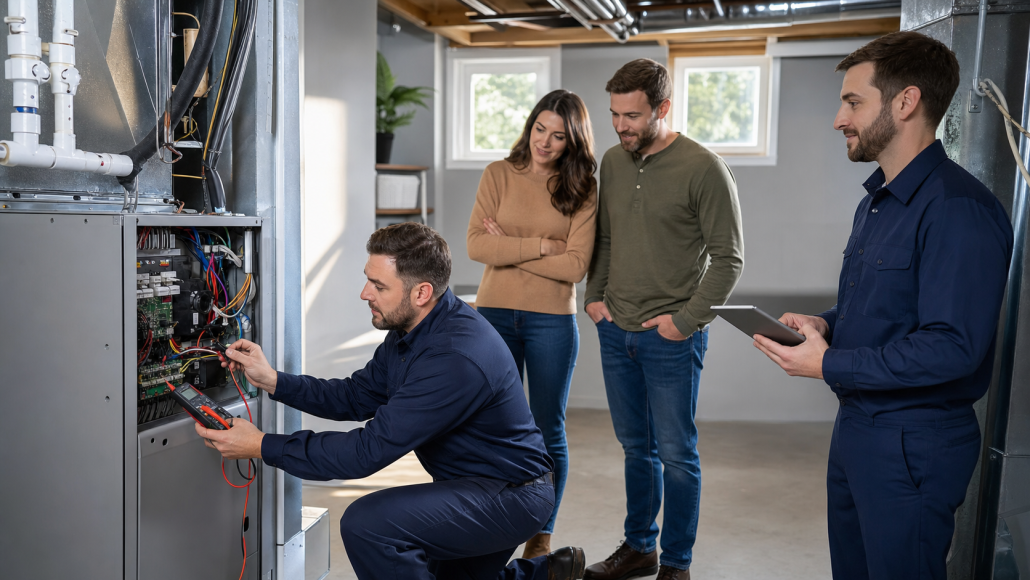
If we determine that an electric furnace suits your basement, the installation process starts with a thorough assessment. We look at the size and layout of the space, existing insulation, air sealing, and how the basement connects to the rest of the home. Proper load calculations help us choose the right furnace size so you avoid short cycling, noise and wasted energy.
A typical installation includes:
- Sizing the equipment based on heat loss
- Designing or modifying ductwork for good airflow
- Planning return air locations for balanced pressure
- Coordinating any necessary electrical work and permits
- Testing system performance and thermostat controls
Building codes and local regulations apply to both HVAC and electrical work, especially in basement suites and renovations. Using licensed professionals helps ensure that the system is not only comfortable but also safe and compliant. Because we handle heating, cooling and plumbing, we can also keep an eye on interactions between new ducts, existing plumbing runs and any future fixtures you have planned.
When an Electric Furnace Makes Sense for Your Basement
Electric furnace installation can be a smart choice for many Nanaimo and central Vancouver Island basements, particularly where:
- There is no natural gas service to the property
- Venting a combustion furnace would be difficult or unattractive
- You want straightforward, reliable heat without cooling
- Solar or other renewable electricity is part of your long-term plan
There are also situations where we might suggest another approach. If you want both heating and cooling in a frequently used family space, a ductless or central heat pump can offer better operating costs and comfort. In some homes, a hybrid setup that uses a heat pump for most of the load and a smaller electric or gas backup for colder snaps gives a good balance.
When you are weighing options, it helps to run through a quick checklist:
- How will the basement be used: suite, family room, office, workshop, or storage?
- What is the current electrical panel size and spare capacity?
- How well insulated are the walls, floors and rim joists?
- Are moisture and drainage under control, or do they need work first?
- What is your preferred balance between upfront cost and long-term energy bills?
By stepping through these questions and comparing electric furnaces with other systems, you can choose a heating solution that fits both your home and how you live in it.
Get Started With Your Project Today
If you are ready to upgrade your home comfort and energy efficiency, our team can help you plan and complete a professional electric furnace installation that suits your space and budget. At ServiceXCEL Heating, Cooling & Plumbing, we take the time to explain your options, answer questions and schedule the work at a time that works for you. Reach out today through our contact page so we can provide a quote and walk you through the next steps.

