Beating Coastal Humidity in Nanaimo with the Right AC Setup
Understanding Coastal Humidity in Nanaimo
Humidity on the central Island has a very specific feel. Even when the thermometer reads a mild one, the air can still feel heavy, sticky, and hard to shake. That is the reality of living in a marine climate like Nanaimo, where moist Pacific air, frequent rain and clouds keep relative humidity high for much of the year.
That excess moisture in the air affects more than comfort. High indoor humidity can:
- Make rooms feel warmer than they really are
- Disrupt sleep and leave you feeling drained
- Aggravate allergies, asthma and other breathing issues
- Encourage dust mites, mould and mildew growth
- Leave offices and commercial spaces feeling stuffy and unproductive
Modern air conditioning in Nanaimo is about more than dropping the temperature a few degrees. When it is properly selected, installed and maintained, it plays a key role in pulling moisture out of the air, improving comfort and indoor air quality at the same time.
How Air Conditioners Actually Remove Moisture
Air conditioners are often thought of as simple “cooling machines,” but a big part of how they keep you comfortable is by drying the air. Inside your indoor unit is an evaporator coil that gets very cold when the system is running. Warm, moist indoor air is pulled across that coil. As the air cools, water vapour condenses on the metal, just like a cold drink sweating on a patio table. That water collects in a pan, then drains away through a condensate line.
When this process runs long enough:
- The indoor temperature drops to your setpoint
- The relative humidity in the space falls to a comfortable range
- The air feels lighter, less sticky and easier to breathe
If the air conditioner is oversized, it can hit the temperature very quickly, then shut off before it has a chance to remove much moisture. You get cool air, but the room still feels clammy. That is why some spaces feel cold and damp at the same time.
Different systems handle moisture a little differently:
- Traditional central AC: Good dehumidification when correctly sized and run on proper settings.
- Heat pumps: Provide both heating and cooling, and in cooling mode they dehumidify in a similar way to an AC.
- Ductless mini-splits: Often have multiple fan speeds and dedicated dry or dehumidify modes, which can be very effective in specific rooms or suites.
The right choice depends on the building, the ductwork, and how you use each space.
Finding the Right AC Size for Nanaimo’s Climate
Sizing is one of the most important decisions when installing air conditioning in Nanaimo. Our climate is not the hottest, but humidity means systems still work hard. An undersized unit will struggle on the muggiest days, running constantly but never quite catching up. An oversized unit will short-cycle, turning on and off in quick bursts, which wastes energy and does a poor job of drying the air.
When we size equipment, we look at far more than just square footage. A proper load calculation considers:
- Floor area and ceiling height
- Insulation levels in walls, attic and floors
- Window size, style and shading
- Orientation of the home or building to the sun
- Air leakage, drafts and construction details
This kind of calculation helps us choose equipment that runs long enough each cycle to remove moisture effectively, without being overworked. Guessing based on a rule of thumb or copying a neighbour’s system size often leads to comfort complaints and higher operating costs.
Smart Thermostat and Fan Settings for Better Dehumidification
Even a well-installed system can struggle with humidity if the settings are not right. On damp coastal days, it is tempting to keep driving the temperature lower, but colder is not always better. When humidity is high, a moderate temperature setpoint, combined with steady dehumidification, usually feels more comfortable and costs less to run.
Some tips we often share:
- Choose a comfortable but reasonable temperature, then stick with it instead of constantly changing settings.
- Avoid setting the thermostat extremely low just to “dry out” the home, which can overcool surfaces and cause condensation.
- If your thermostat has a humidity reading, aim for a consistent, moderate level rather than chasing a specific number every hour.
Fan settings matter too. On most systems, “auto” is better for dehumidification than “on.” When the fan is set to “on,” it continues to blow across the coil even when the compressor is not running. That can re-evaporate water sitting on the coil and send moisture back into the home. With “auto,” the fan stops when the cooling cycle stops, so condensed water can drain away.
Newer systems and smart thermostats may offer extra tools such as:
- Dehumidify or dry mode, which prioritizes moisture removal
- Multiple indoor fan speeds, allowing slower airflow that can improve dehumidification
- Dedicated humidity control, where you can set a target humidity as well as a temperature
Used correctly, these features can make a noticeable difference in comfort on those heavy, muggy days.
When to Add Dedicated Humidity Control
Sometimes, even well-sized and well-set AC is not enough to manage moisture on its own. That is especially true in homes with moisture challenges or buildings with specific occupancy patterns. Warning signs that humidity is winning include:
- Foggy windows or condensation on glass and metal
- Musty odours, especially in closets, crawlspaces or storage areas
- Visible mould spots or black staining on walls, ceilings or window frames
- Persistent dampness in basements or lower suites
In those situations, we often look beyond the cooling system itself. Options can include:
- Whole-home dehumidifiers tied into existing ductwork
- Ventilation improvements to bring in fresh air and exhaust stale, moist air
- Heat recovery ventilators that exchange indoor and outdoor air while reducing energy loss
It is also important to control moisture at the source. Plumbing leaks, dripping fixtures, poor grading around the foundation or missing vapour barriers can introduce more moisture than any AC system can reasonably handle. Bathrooms and kitchens without effective exhaust fans can add a huge amount of steam to the air. Addressing these issues reduces the load on your equipment and improves overall comfort.
Keeping Your System Ready for Humid Coastal Weather
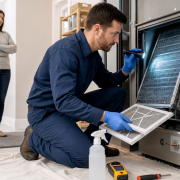
Even the best-designed system cannot perform well without regular care. Nanaimo’s coastal air carries salt, pollen and fine debris that can build up on filters and coils. Over time, that build-up restricts airflow, reduces efficiency and cuts down on the AC’s ability to remove moisture.
A simple maintenance routine should include:
- Cleaning or changing filters on the schedule recommended for your system
- Having coils inspected and cleaned so air can move freely
- Checking refrigerant levels to ensure the coil can reach the right temperature
- Clearing condensate drains so water can flow out instead of backing up
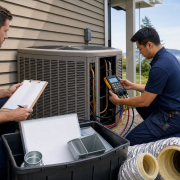
At ServiceXCEL Heating, Cooling & Plumbing, we offer ongoing maintenance support for residential and commercial HVAC and plumbing systems across Nanaimo and central Vancouver Island. Regular checkups before the warm, damp season mean your equipment is ready to handle both cooling and dehumidification when you need it most. With the right setup, smart settings and consistent care, air conditioning in Nanaimo can keep your space comfortable, healthy and dry, even when the coastal air outside feels anything but.
Get Started With Your Project Today
If your home is struggling to stay cool or you are planning an upgrade before the next heat wave, we are ready to help. Explore our air conditioning in Nanaimo services to find the best fit for your home and budget. At ServiceXCEL Heating, Cooling & Plumbing, we take the time to understand your comfort needs, then provide clear recommendations and upfront pricing. Have questions or want to book a visit? Simply contact us and our team will follow up promptly.